

SUNSHINE
SKIN JOURNAL · WHITENING · N°01
Resistant Pigment
“Step-by-step care for deep dermal pigments such as Ota and ABNOM”
INTRODUCTION
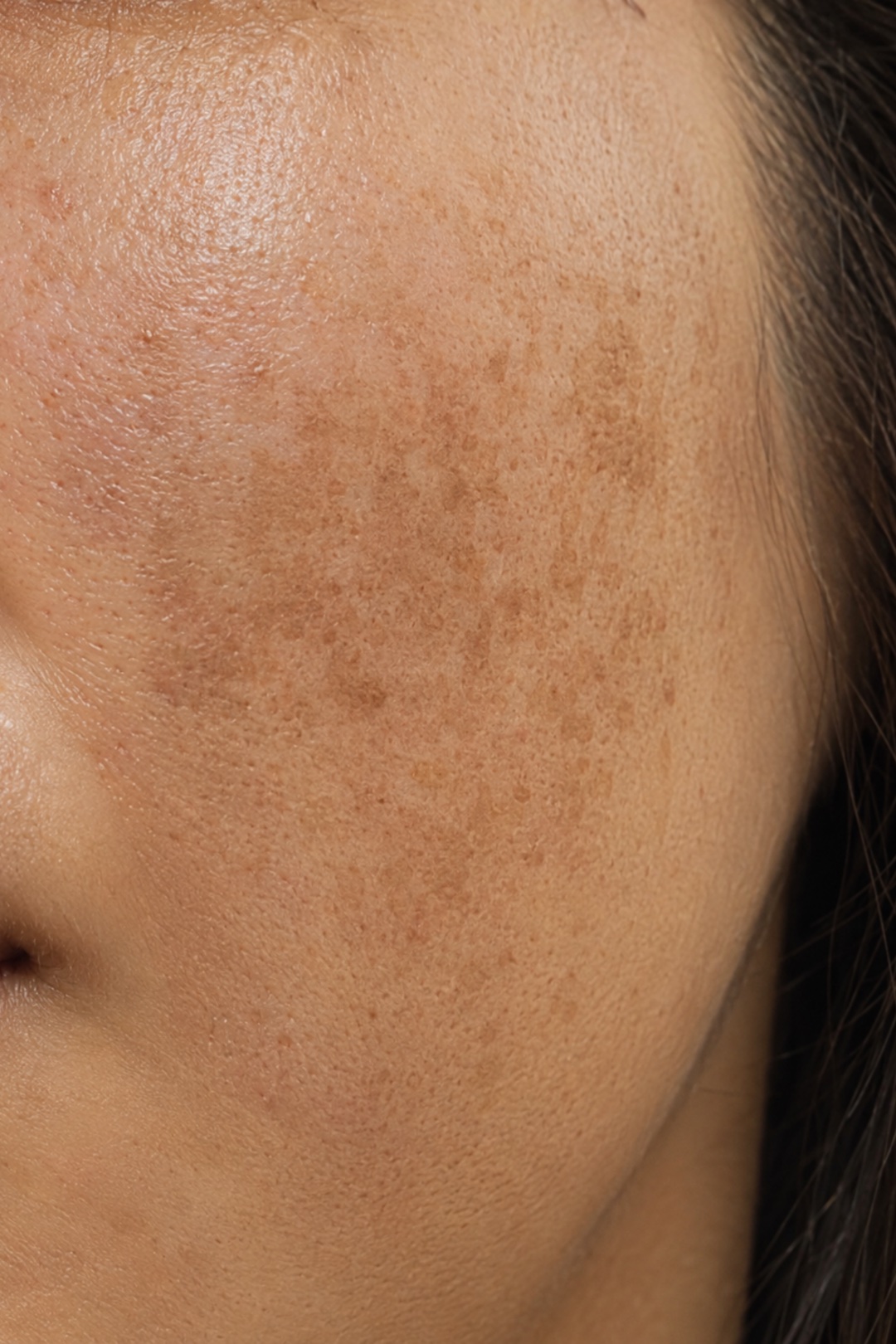
Resistant pigments located in the deep dermis, such as Ota nevus and ABNOM (Acquired Bilateral Nevus of Ota-like Macules), do not easily fade with regular toning. They are gradually lightened over a long period using a combination of long-wavelength lasers and multi-modes.
APPROACH
How it works
1) Reach deep dermal pigments with Long-pulsed Nd:YAG, 2) Additional breakdown with Q-Switched mode, 3) Assist dermal regeneration with Secret RF, 4) Proceed with a long-term plan of 10-20 sessions at intervals of 3-5 weeks.
RECOMMENDED FOR
Recommended
for you
- 01
Individuals with bluish-gray pigments on the cheeks and temples (Ota nevus, ABNOM)
- 02
Those who have not seen results from regular toning for years
- 03
Individuals who can follow a long-term treatment plan
- 04
Those concerned about deep dermal pigments
- 05
Individuals who can have regular monitoring by medical staff
PROCESS
From consultation to recovery
in one flow
01
Precise Consult
We diagnose skin texture, tone, and volume, then design treatment intensity around your rhythm of life.
02
Tailored Treatment
After topical anesthesia, cartridges, energy, and shot count are adjusted to your skin thickness and response.
03
Recovery Care
Immediate post-treatment soothing and a home-care guide — with a follow-up schedule as needed.
FAQ
Frequently Asked Questions
Q. How many sessions are needed?+
Depending on the depth of the lesions, more than 10-20 sessions may be required, conducted at intervals of 3-5 weeks.
Q. Will it completely disappear?+
It will significantly lighten, but complete removal is often difficult. Realistic goals are set during the initial consultation.
Q. What about pain?+
Anesthesia cream is applied. There may be a slight sting during treatment of the deeper layers.
Q. Can it be combined with other treatments?+
It is effective when combined with moisturizing, sun protection, and skin barrier care.